I was lucky enough to visit the Valley of the Fallen as part of a field trip for my Culture of Spain class. This monument and church is located in the mountains just about an hour outside of Madrid. Early on a Wednesday morning we travelled to SLU Madrid’s campus to take a bus up for the trip. After learning so much about Spain in the 20th century and Franco’s legacy I was excited to see the monument.
Warning: somewhat preachy description of the history of the monument (I really like this class if you can’t tell)
Franco, who ruled Spain from 1939 until 1975, ordered the construction of the monument in the years following the Spanish Civil War. It was meant to be in honor of all of those who had fallen during the war, both Republicans and Nationalists. Franco had bodies recovered from mass graves all over Spain trucked in to be buried in the walls of the monument. Supposedly the church has records of all of the people who were buried there, but they refuse to release them to the public. Despite its diplomatic message, only about 1/6 of the people buried there fought for the Republic and it is filled with Nationalist symbols. Supposedly religious images include canons and fascist flags. It is especially eerie because there is no indication of the 36,000 bodies buried in the walls besides a small sign in one of the chapels that reads “Fallen for God and Spain.” This is interesting considering that Republicans were fighting for a very different Spain in the Civil War than Franco was, and they wanted it to be secular, too. On top of all of this, the monument itself was built using slave labor in which it is believed many people died due to the grueling work involved. There is evidence to suggest that these people were simply thrown into the graves with the others who had died during the war. Up until last fall, Franco was also buried here, except he had a marked grave at the center of the church directly behind the alter. Almost 45 years after his death, he was exhumed and moved to a more private chapel.
While we were actually inside the church, guards followed us and listened with disdain as my professor discussed its controversial history. This only added to the already uncomfortable vibe of the experience. Still, I say that I was lucky to visit the Valley of the Fallen because it is something that I know I would not have been able to do had it not been for the class I am taking. I also wouldn’t have understood exactly what this monument represents in Spanish history if it wasn’t for the class. Learning about the country I am living in has been incredible, and it gives me a much deeper appreciation for the current political and social situation in Spain. Despite its history, the monument was admittedly very impressive. The view from the mountains alone was stunning, and paired with such an imposing building it was breathtaking. I will always maintain that it is important to understand the context of it all though.
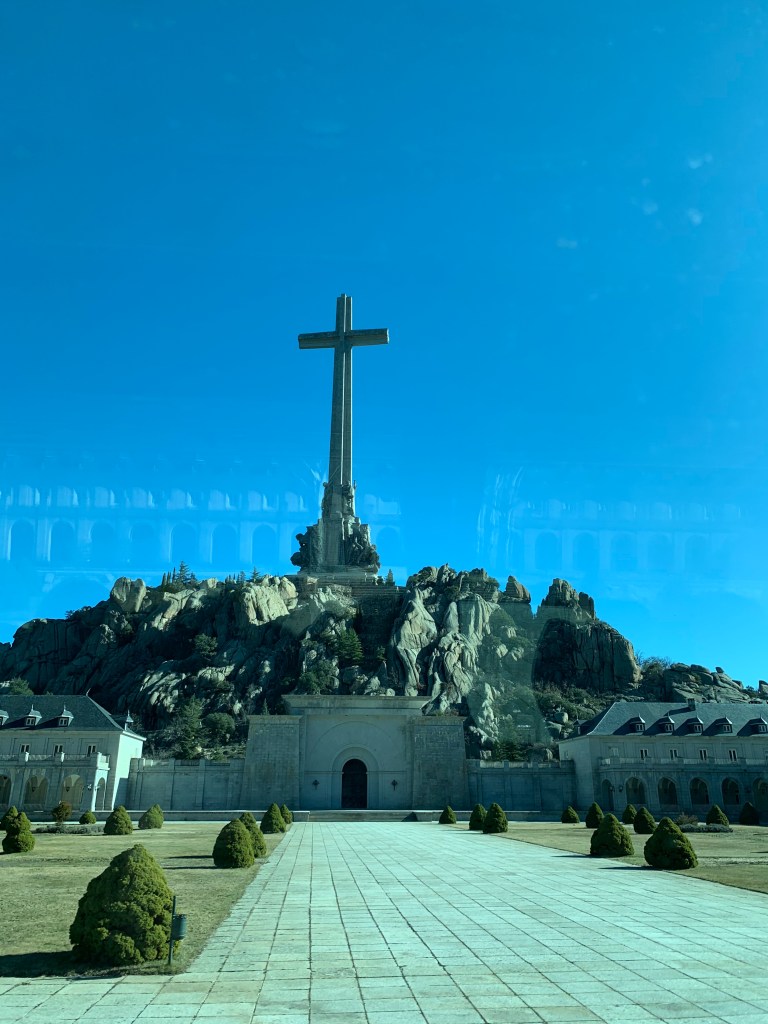
View from the bus 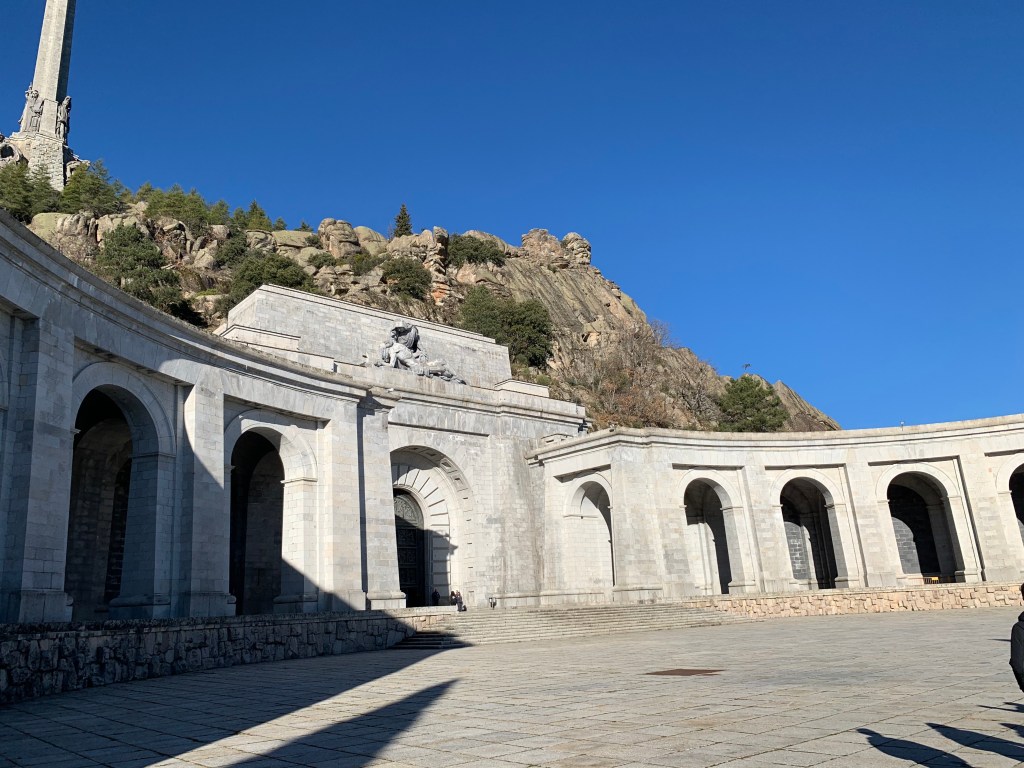
Front of the monument 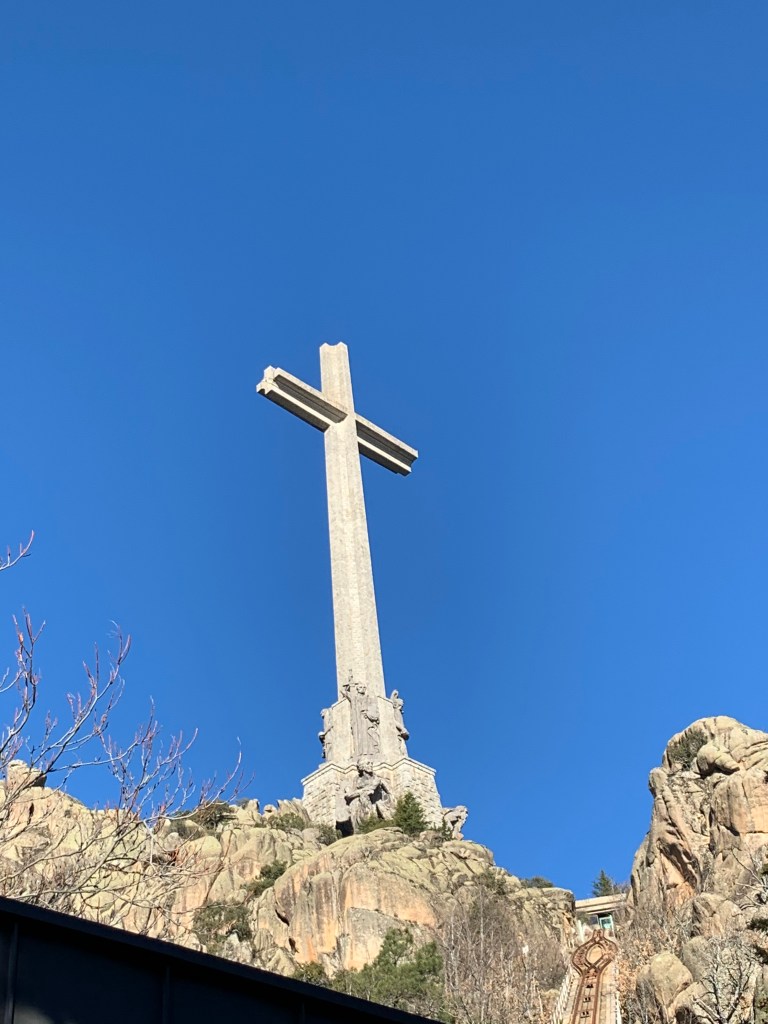
The famous cross in the mountains, located directly above the altar of the church inside 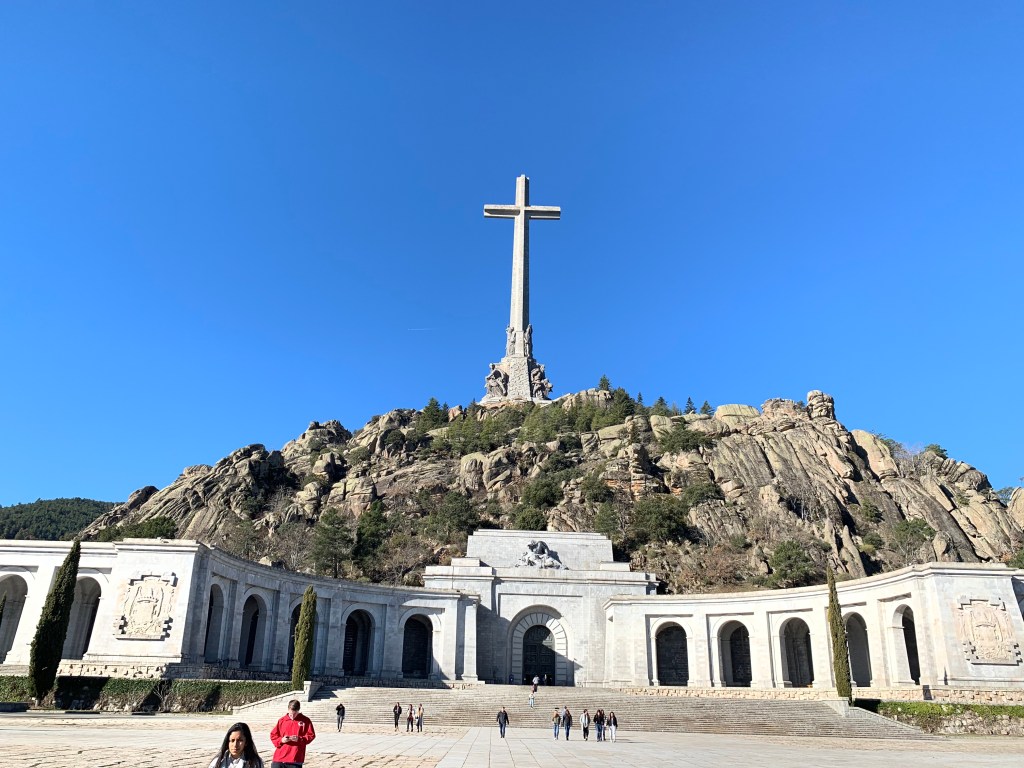
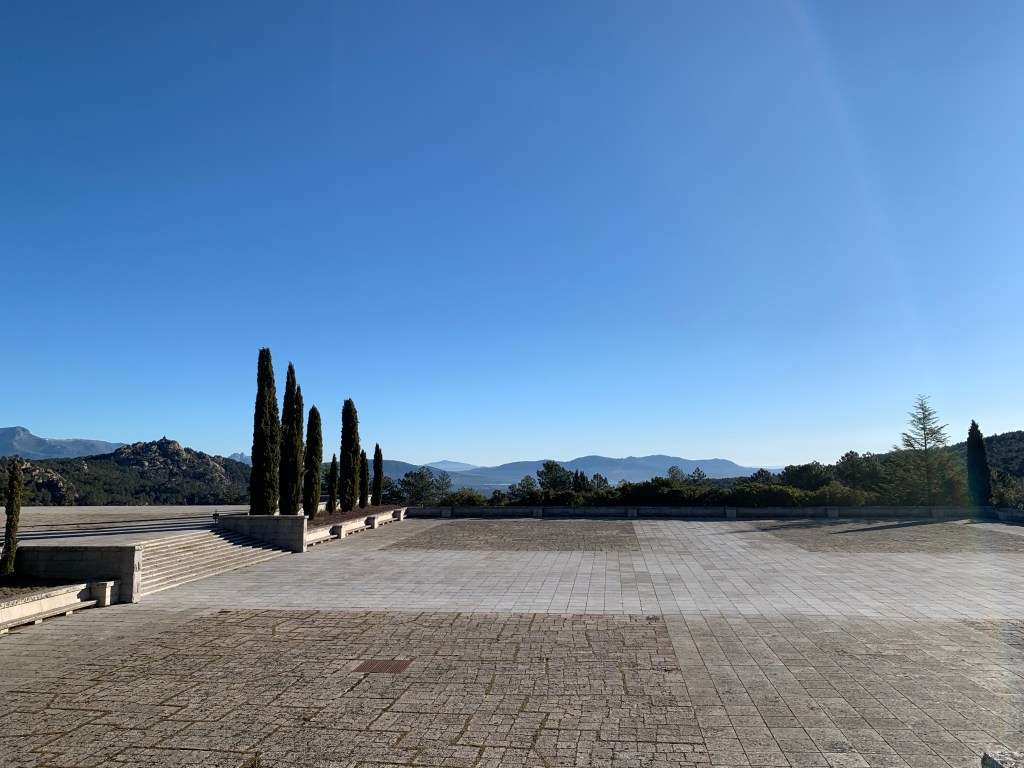
View from the front of the monument including the courtyard 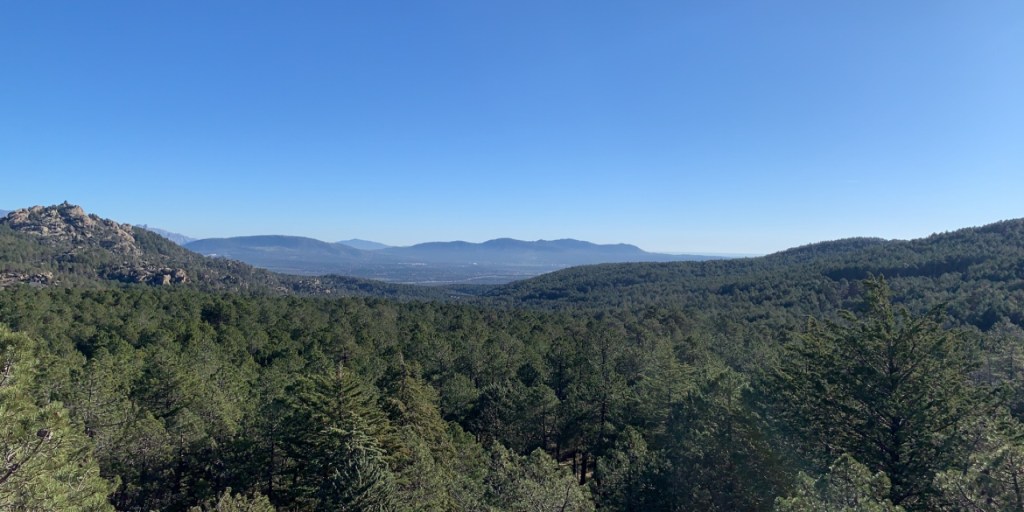
View of the mountains from the courtyard 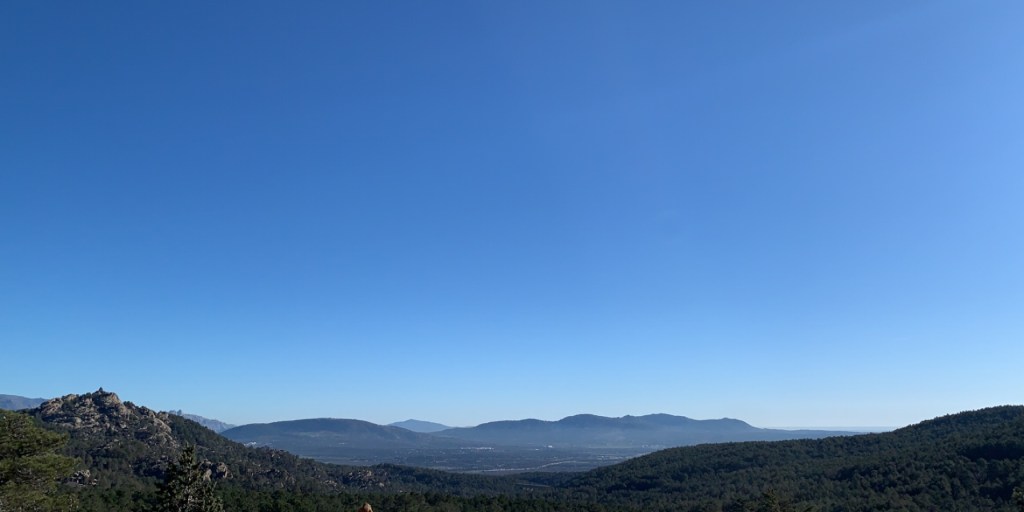
View of the mountains from the courtyard

